Selfia: A Modern Calligraphy Script Font for Handmade Creators
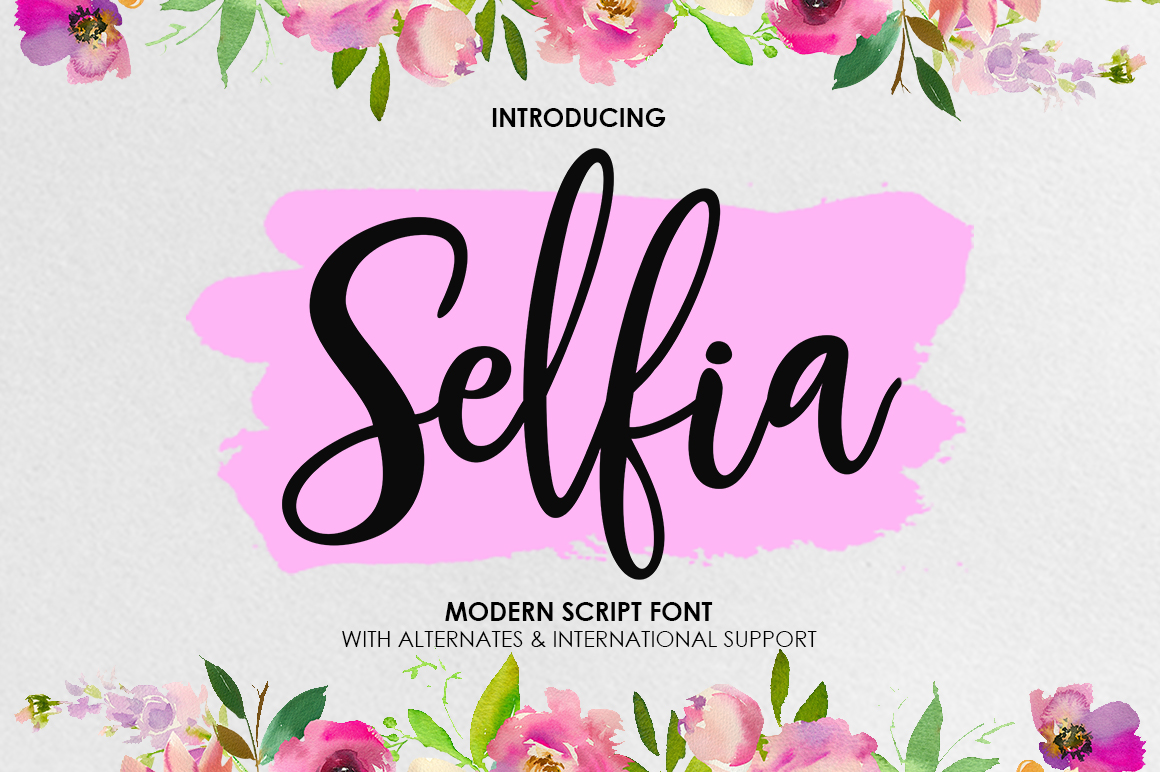
It started with a candle label — one I’d sketched three times, printed twice, and still wasn’t quite right. The scent was lavender-vanilla, the jar was matte white, the ribbon was ivory twill… but the name? It looked stiff. Too digital. Too generic. That’s when I opened my font library and typed “Selfia” into the search bar. And just like that — *click* — the mood shifted. Selfia is a modern calligraphy script, with a stunning handwritten style. It’s modern with a tasty, fresh flow. Not fussy. Not overly ornate. Just alive.
Selfia for Wedding Invitations and Elegant Branding
When you’re designing wedding stationery — whether it’s a single welcome sign or a full suite of save-the-dates, menus, and place cards — every letter carries weight. Selfia Script features many stunning alternates, allowing you to create elegant variation without switching fonts. I used the swash capital “S” for “Sarah & James,” swapped in a looping “t” for “together,” and softened the ampersand with a subtle ligature. Because Selfia is a Script Handwritten font, it reads as personal and intentional — not templated. For printable creators, this means your digital invitation templates feel bespoke, even when scaled across dozens of listings. Pair Selfia with a clean sans serif (like Montserrat or Poppins) for body text, and the contrast lifts the whole design: warmth meets clarity.
Selfia for Candle Labels and Small-Batch Product Packaging
Candle labels live in tight spaces — 2” x 3”, sometimes smaller — and need to breathe while staying legible. Selfia works beautifully here because its baseline rhythm stays consistent, and its letterforms open generously. I tested it at 14pt on a kraft sticker sheet: “Honeycomb + Sage” curved gently along the top arc, and the lowercase “g” and “y” had just enough tail to add charm without tangling. As a Fonts user who cuts with Cricut Design Space, I made sure to convert to outlines before exporting — no surprises on the mat. Bonus: the alternates let me avoid repeating the same “a” or “e” across multiple scents, giving each label visual distinction while keeping brand cohesion. Selfia isn’t built for paragraphs, but it shines for short phrases, names, and titles — exactly what handmade product packaging needs.
Selfia for Printable Wall Art and Planner Pages
I designed a set of minimalist floral wall quotes — “breathe,” “still,” “enough” — and wanted something that felt tender but not cutesy. Selfia delivered. Its fresh flow gives quiet confidence to gentle words. On planner pages, I used the lighter weight (if available) for section headers like “Weekly Intentions” or “Gratitude Log,” then dropped in a bold sans for checkboxes and dates. Because Selfia is a modern calligraphy script, it adds soft authority — not childish whimsy, not corporate stiffness. When printing on textured cotton paper or matte cardstock, the slight irregularity in stroke width mimics real ink, grounding digital files in tactile warmth. Always check your font file includes OpenType features: those alternates and ligatures are activated automatically in Adobe apps and many modern design tools — no manual swapping needed.
Selfia for Boutique Tags and Hand-Tied Packaging
That little tag tied to a soap bundle or gift box? It’s often the first thing a customer touches. Selfia makes that moment feel considered. I printed “hand-poured • small batch • made with care” on ivory linen tags using a laser printer — and the script held crisp detail down to 10pt. No blurring. No pixelation. As a Script Handwritten font, Selfia reads as human-made, which reinforces authenticity for handmade sellers. For physical merchandise like tote bags or mugs, I kept text minimal: just a single word (“gather,” “slow,” “kind”) arched over a simple line drawing. Selfia’s natural entry and exit strokes make curves intuitive — no forced warping required.
Selfia for Seasonal Digital Downloads and Holiday Stickers
Last November, I built a holiday sticker sheet: ornaments, snowflakes, and tiny phrases like “joy,” “merry,” and “cozy.” Selfia gave the text dimension — not flat, not cartoonish, but warmly festive. I layered it over watercolor backgrounds and exported as PNGs with transparent backgrounds; the thin strokes stayed sharp, and the alternates helped me rotate through six versions of “noel” so no two stickers repeated. As a Fonts creator selling on Etsy, I double-checked the license: yes, commercial use is included for both physical products and digital downloads. I also confirmed multilingual support covered basic accented characters — essential for French or Spanish holiday phrases. If you’re designing SVG files for Silhouette or Cricut users, test the cut lines first: Selfia’s connected letters flow well, but avoid ultra-thin swashes on intricate cuts unless you’re willing to simplify manually.
Selfia for Greeting Cards and Hand-Stamped Stationery
There’s magic in pairing Selfia with hand-stamped elements — a pressed flower, a wax seal impression, a faint ink bleed. Its stunning handwritten style bridges the gap between digital precision and analog soul. For birthday cards, I used the bolder alternate “B” for “best wishes,” then softened the rest with lighter-weight glyphs. On thank-you notes, I leaned into the flowing “y” and “r” to echo handwriting motion. Selfia isn’t meant for long blocks of copy, but for front-of-card impact? Absolutely. And because it’s a Script Handwritten font, it pairs effortlessly with vintage-inspired serifs (think Playfair Display) or airy geometric sans fonts (like Raleway) — never competing, always complementing.
If you make things by hand — whether it’s candles, cards, prints, or packaging — Selfia doesn’t just sit on your screen. It moves into your process. It lifts your labels. It deepens your invitations. It makes your digital files feel like they hold breath. Selfia is a modern calligraphy script, with a stunning handwritten style. It’s modern with a tasty, fresh flow. And when you open that font file and start typing your first word — “hello,” “love,” “home” — you’ll feel it too: the shift from making to meaning.